Shifting From Firefighter to a Designer of Long-Term Growth
Here is what I notice with a lot of the business owners and leaders I work with. They are good. They are really good. They are smart, capable, experienced, talented and they are utterly exhausted, often burnt out from reacting to one problem after another.
Firefighting feels productive. It feels like leadership. Every solved crisis, every rescued project, every problem you personally untangle there is real satisfaction in that. You are needed, you are effective, you got it DONE.
And yet the business seems to always be a few steps behind where it needs to be to scale with efficiency. There is something important to understand about how we humans are wired. The brain loves the perception of a solved problem. The relief of putting out a fire, the clarity of a resolved crisis, these feel good in the moment, and what feels good, we tend to repeat.
Over time, firefighting becomes the default. It becomes our identity. Leaders start to mistake urgency for productivity and busyness for progress. The days fill up and the calendar remains full. The work that would actually move the business forward, such as the thinking, the designing, the planning , the building keeps getting pushed to later.
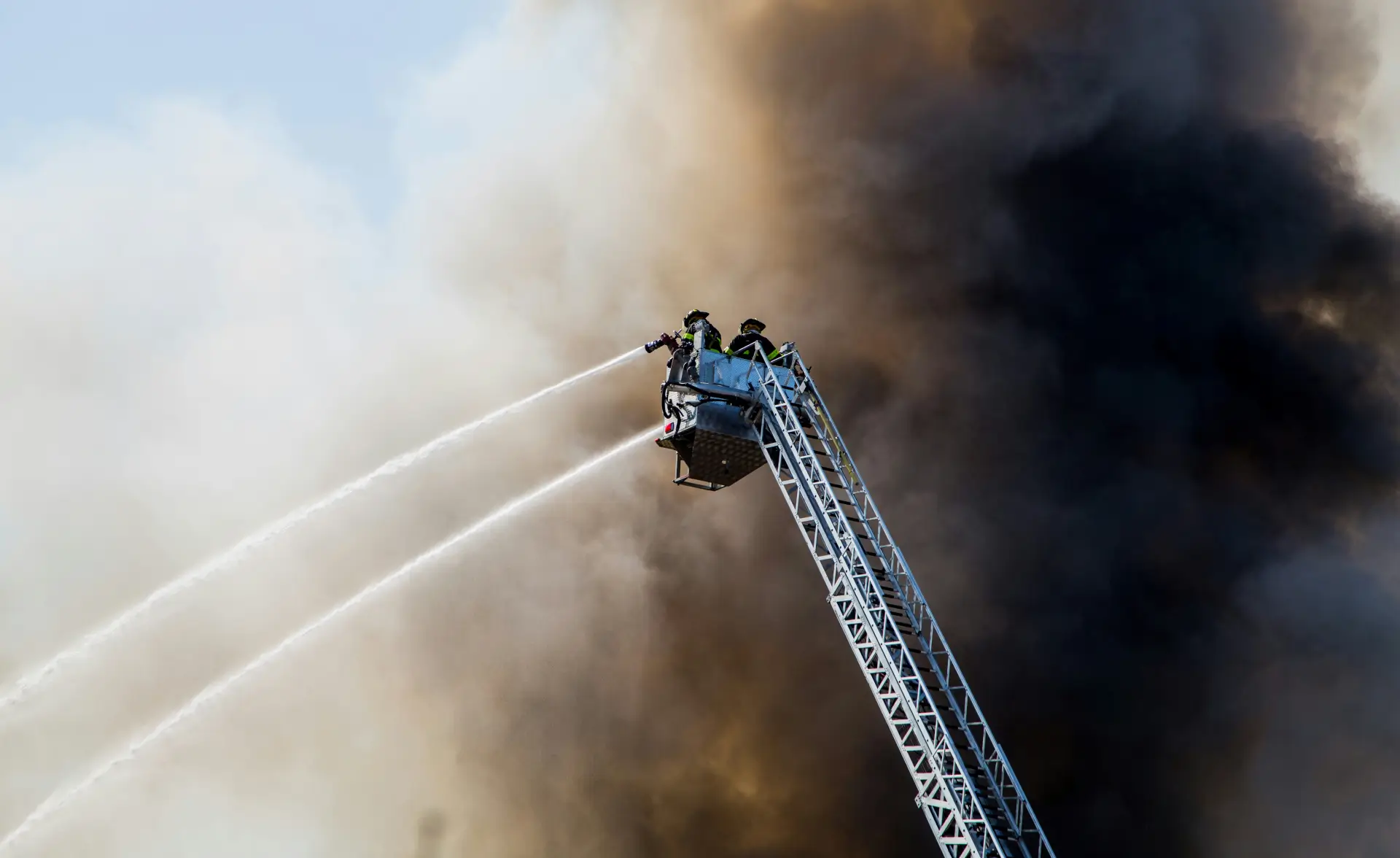
Reactive leadership is a habit and for many high-performing business owners, it has become a physiological pattern. Every urgent problem activates the body’s stress response, adrenaline and cortisol flood the system, focus sharpens, energy spikes, and you jump into action. And when the crisis passes, there is a very real neurochemical reward. You experience a sense of relief and a sense of accomplishment. A kind of aliveness that calm, steady days do not always provide.
This cycle >urgency, activation, resolution, reward is genuinely addictive. Not metaphorically, the nervous system learns it. Your nervous system begins to seek the stimulation of the next fire because that is where it has learned to feel capable and alive.
Here is what I invite you to notice: If a quiet day feels vaguely uncomfortable, if stillness makes you restless, if the absence of crisis feels like something is wrong, be curious and reflect on this. That is your nervous system telling you it has been trained on urgency.
“A nervous system running on adrenaline is not built for the work of systemic thinking.”
This is one of the most underappreciated truths in leadership development: the quality of your thinking is directly shaped by the state of your nervous system.
When the body is in a stress response, even a mild, chronic one, the brain prioritizes speed and survival. It narrows its focus to what is immediate. It looks for the fastest path to resolution. It is extraordinarily good at tactical problem-solving in that state.
What it cannot do well from that state is think systemically. Systemic thinking requires the capacity to zoom out to hold multiple time horizons at once, to see patterns across quarters rather than crises across days, to consider second and third-order consequences of decisions. That kind of thinking requires a regulated nervous system. It requires presence. It requires the kind of stillness that a body running on adrenaline actively resists.
This is why the shift from firefighter to designer is not purely a strategic or organizational change, it is a somatic one. It begins with learning to tolerate the discomfort of calm or said another way, being bored. To build a relationship with steadiness. To recognize that the absence of urgency is not a problem to be solved, it is the condition that makes great leadership possible.
The leaders who build lasting organizations are not the ones who are best in a crisis. They are the ones who have developed the capacity to think clearly, design intentionally, and lead from a regulated and grounded place even when, especially when the pressure is real.
That capacity is developed and it starts with understanding what your nervous system has been trained to do.
One of the most telling signs that a business owner is operating reactively is this: the same problems keep surfacing. Different people, different quarters, different circumstances, same problem.
When that happens, it is worth asking a different question. Not how do I fix this again but what is the root cause that keeps producing this outcome?
Most problems that re-occur are not people problems or luck problems. They are design problems. Something in the way the work is organized, communicated, or handed off and to whom, is creating the conditions for that problem to appear again and again. Fixing the symptom without examining the cause is like bailing water without looking for the leak. This is the shift from firefighter to designer.
The firefighter asks: what do I do about this? The designer asks: what needs to be true and in place so this stops happening?
The designer is thinking about how the business works, not just whether it is working today. They are asking: what are the systems, the processes, the people, the feedback loops that allow this organization to function well and grow sustainably with or without me in the room?
That question requires a kind of patience that fire fighters never develop. When you are always reacting you never get to the deeper work, and the deeper work is where the growth happens organically and with ease.
Here is what I invite you to consider. Every time you step in to solve something your team should be equipped to handle, ask yourself: am I building capacity here, or am I borrowing against it?
Great design starts with an honest audit. Where are the places in your business that depend entirely on you? Where are decisions bottlenecked because only you have the context, the authority, the expertise or the habit of being the one who decides?
Those are the places to start.
Building scalable structure means getting clear about what genuinely requires your judgment and what can be documented, delegated, trained for or designed into a process. It means creating the protocols, the clear expectations, the skills, decision rights and the feedback systems that allow your team and the business to move forward.
A business that runs with integrity and capability because of the people and systems you have built that is the work of a leader.
None of this happens in the margins of a reactive day. If you want to shift from firefighter to designer, you have to protect time for the work of designing. That means being intentional about where your attention goes. It means empowering your team to handle what they are capable of handling and investing in developing their capability rather than bypassing their development.
It also means doing the inner work of regulating your nervous system. Learning to be comfortable in the quiet. Learning to stay present with the slower, less visible work of building even when nothing is on fire. That is a practice and for many high performers, it is one of the most challenging practices of all. Maybe a good day is one where the right people solved their own problems, the business moved forward, and you spent time building something that will matter next year? That is the measure of a designer, and it is only accessible from a grounded, regulated place.
If you recognize yourself in the firefighter pattern, I want you to know something. It makes complete sense. It is what worked when you were building. The drive, the responsiveness, the willingness to do whatever it took those qualities are part of what got you here. At the saying goes ”what got you here is not going to get you there”.
Your next chapter requires a different kind of leadership. One that is less about your ability to respond and more about your ability to design, develop, and trust. It also requires a different relationship with your own nervous system, one where steadiness becomes the foundation you lead from, rather than something you get to when the fires are out. Sure, the fires will always be there to some extent. The question is whether you are building something that can outlast them.

Alicia Marie is the Founder and Managing Director of People Biz Inc, a leadership and development firm established in 2000. She works with founders, business owners, and senior leaders to strengthen leadership capability and build organizations that grow sustainably through their people. Her work integrates strategy, human behavior, and dialogue-based training and coaching.